Army initial counseling sets expectations, records performance, and clarifies duties. Using Form 4856, leaders document goals, standards, and career guidance. Templates in PDF or Word help ensure consistency, while fillable fields streamline completion and storage.
Leaders focus on mission, integrity
Purpose of Initial Counseling
Initial counseling is the first formal interaction between a commander and a new soldier, designed to set the tone for the soldier’s career and to establish a clear framework for performance, conduct, and professional growth. The primary objectives are to communicate the Army’s core values, mission priorities, and the specific duties that the soldier will perform; to document the soldier’s baseline knowledge and skills; and to create a shared understanding of expectations, standards, and the consequences of non‑compliance. By using Form 4856, the commander records the soldier’s goals, identifies training needs, and outlines a pathway for advancement, ensuring that the soldier is aware of the resources available for career development. This process also serves as a legal record that protects both the soldier and the command by providing a documented reference for future evaluations, promotions, and disciplinary actions. Effective initial counseling fosters accountability, promotes a culture of continuous improvement, and reinforces the Army’s commitment to excellence and integrity.
In addition, initial counseling establishes a foundation for future performance evaluations, enabling the commander to track progress and identify gaps early. It also reinforces the importance of adherence to Army regulations, ethical conduct, and the soldier’s role in mission success. By documenting expectations, the process creates a transparent, measurable standard that guides training and career development. development. today now
Legal Basis and Regulations

Army initial counseling is mandated by Army Regulation 600‑20, the Army Command Policy, and the Uniform Code of Military Justice (UCMJ). Regulation 600‑20 requires commanders to conduct counseling for every new soldier to establish standards, clarify duties, and document performance expectations. The UCMJ provides the legal framework for discipline and ensures that counseling records are admissible in court‑martial proceedings. Additionally, Army Regulation 600‑8‑22, the Army Compensation and Benefits System, outlines the use of counseling for promotion eligibility and career progression. The Department of the Army’s Instruction 600‑20.1 further details the procedural steps, including the use of Form 4856, the official counseling form. Compliance with these regulations guarantees that counseling is consistent, objective, and defensible, thereby protecting both the soldier and the command from legal liability and ensuring that all actions are in accordance with the Army’s legal and ethical standards. The legal basis also supports the use of electronic record‑keeping systems, such as the Army’s Integrated Personnel and Pay System – Army (IPPS‑A), which must preserve the integrity and confidentiality of counseling documents. By adhering to these regulations, commanders reinforce the Army’s commitment to lawful conduct, fairness, and the professional development of every service member. Furthermore, the Army’s counseling policy emphasizes the importance of documenting any disciplinary actions, commendations, or special achievements, ensuring that the record reflects a comprehensive view of the soldier’s service record. This documentation supports future evaluations, promotions, and awards, and it serves as a critical tool during investigations or legal proceedings. By maintaining meticulous records, commanders demonstrate compliance with the Army’s legal obligations and uphold the integrity of the military justice system.

Form 4856: The Core Document
Form 4856 is the official Army counseling form used for initial counseling. It captures mission, standards, goals, and performance expectations. The form is structured into sections: introduction, performance, and action plan. Accurate completion ensures compliance with regulation 600‑20. It is for progression growth!!
The second section, “Performance,” is the core of the document. Here the counselor documents the soldier’s current performance level, identifies strengths, and highlights areas for improvement. This section is organized into sub‑items that cover mission, standards, and personal development. The counselor uses objective language, referencing specific incidents or metrics whenever possible.
The third section, “Action Plan,” outlines concrete steps the soldier will take to meet expectations. It includes short‑term and long‑term goals, training requirements, and any corrective actions. Each goal is paired with a measurable outcome and a target completion date, allowing both parties to track progress.
Finally, the “Signatures” section confirms that both counselor and soldier have reviewed and agreed to the counseling content. The signatures also serve as a legal record, protecting the chain of command and ensuring compliance with Army Regulation 600‑20.
When using a PDF template, each section is pre‑formatted with fillable fields. This design reduces errors, speeds up the process, and ensures that every counseling session is documented consistently across units. Stored per policy.
How to Complete Form 4856
Step 2: Log into the official Army e‑Form portal or open the downloadable PDF template. If using a fillable PDF, click the “Edit” button and navigate to the “Performance” section. Enter objective observations, citing specific incidents or metrics. Avoid vague language; use quantifiable data whenever possible.
Step 3: Draft the “Action Plan.” For each identified area of improvement, write a SMART goal—Specific, Measurable, Achievable, Relevant, Time‑bound. Include training courses, mentorship, or corrective actions, and set a realistic deadline. This makes follow‑up easier and demonstrates accountability.
Step 4: Review and finalize. Read the entire document for clarity, consistency, and compliance with AR 600‑20. Verify that all fields are completed and that the narrative aligns with the soldier’s career objectives. If using a PDF, save a copy for the unit file and upload it to the command’s record‑keeping system.
Step 5: Signatures. Both counselor and soldier sign in the designated area. The counselor’s signature confirms the counseling’s accuracy while the soldier’s signature acknowledges receipt and understanding. Store the signed form in the soldier’s official file and in the unit’s digital archive.
This method promotes accountability and growth daily;

Printable and Fillable PDF Templates
Leaders can download Form 4856 templates from the PublishingDirectorate or e‑Form portal. The PDF is fillable, allowing entry of datesgoals and signatures. Print versions are available for unitsensuring compliance
Where to Find Official Templates
Official Form 4856 templates are centrally maintained by the Army Publishing Directorate (APD) and can be accessed through the APD e‑Form portal or the APD official website. The e‑Form portal offers a searchable database where users locate the most current version of Form 4856, download it in PDF format, and, if desired, use the fillable PDF that includes interactive fields for dates, goals, and signatures. Units that prefer hard copies find a printable version that can be printed on standard 8;5×11 paper. In addition to the APD, many installation‑level resources such as the Army Installation Management Agency (IMA) and the Army Human Resources Command (HRC) maintain copies for quick reference and distribution. The Army’s official website, Army.mil, hosts a “Forms & Publications” section where users search by form number or title. When downloading, verify the form number is 4856 and that the version date matches the current Army regulation (AR 25‑50.1). The APD also provides a PDF that includes a digital signature field, allowing electronic completion and submission in accordance with the Army’s electronic records management policy. For those who need to incorporate the form into a larger counseling package, the APD offers a PDF that can be merged with other documents such as the Soldier Performance Report (SPR) or the Career Development Plan (CDP). Finally, the Army’s “Army Knowledge Online” (AKO) portal offers a “Forms & Documents” library where users download the form in multiple formats, to facilitate data entry and record‑keeping.!
Tips for Using Fillable PDFs Effectively
When working with Army Form 4856 in a fillable PDF, start by opening the file in a trusted PDF reader such as Adobe Acrobat Reader DC or the Army’s own PDF viewer. Verify that the form’s interactive fields are enabled; if not, use the “Prepare Form” tool to activate them. Use the “Save As” function to create a unique copy before filling, preserving the master template for future use. Fill each field with clear, concise text, avoiding abbreviations unless standard Army terminology is used. For date entries, use the built‑in date picker to maintain consistency with the Army’s date format (MM/DD/YYYY) and accuracy. When adding comments or narrative sections, keep the text within the field limits to prevent truncation; if the field is too small, consider using the “Add Text” tool to create a larger area to support mission readiness. Use the “Check” or “Radio” buttons for status indicators, ensuring that only one option is selected to avoid confusion to maintain readiness. After completing the form, review the “Print Preview” to confirm that all fields display correctly and that signatures are positioned properly. Sign electronically using a certified digital signature if available; otherwise, print, sign, and scan the form, then attach the scanned image to the PDF. Finally, save the completed form with a descriptive filename that includes the soldier’s name, date, and “Initial Counseling” to facilitate easy retrieval from the unit’s electronic record system. This workflow ensures accuracy, compliance, and efficient record‑keeping. To ensure compliance with standards risk ! And ensure compliance! Compliance and accuracy are essential always!

Example Counseling Sessions
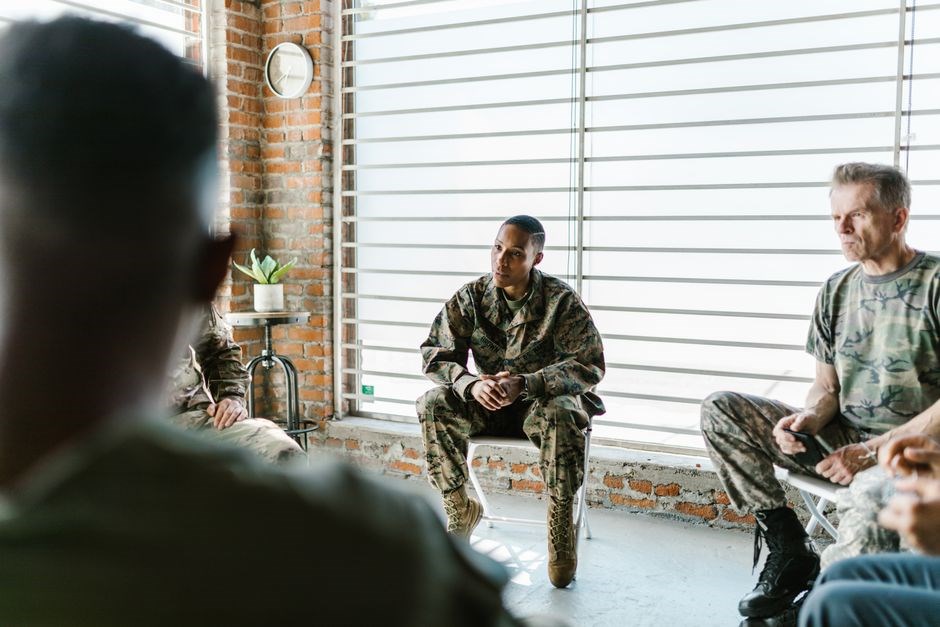
Sample initial counseling narratives illustrate mission focus, conduct standards, and career goals. Leaders record expectations, performance metrics, and development plans, ensuring clarity and accountability every soldier’s first official Army counseling session.!
Sample Initial Counseling Narrative
During the initial counseling session, the commanding officer reviews the Army’s core values, mission, and the soldier’s role. The officer explains the purpose of Form 4856, highlighting that it documents expectations, performance standards, and career development goals. The narrative begins with a brief introduction, noting the soldier’s rank, unit, and assignment. The officer outlines key responsibilities, emphasizing the importance of integrity, discipline, and teamwork. Specific performance metrics are listed, such as physical fitness standards, weapons qualification, and proficiency in assigned tasks. The soldier’s short‑term goals are set, including completing required training courses and achieving a certain rating on the next performance evaluation. Long‑term objectives address career progression, potential for promotion, and additional education opportunities. The officer also discusses the importance of maintaining a professional appearance, adhering to the Uniform Code of Military Justice, and reporting any health or personal issues promptly. The narrative concludes with a mutual agreement, where the soldier acknowledges understanding the expectations and commits to meeting them. The officer signs and dates the form, finalizing the official record of the counseling session.
Additionally, the officer introduces the soldier to the unit’s mentorship program, encouraging participation in leadership seminars and after‑action reviews. The soldier is advised to seek guidance from senior NCOs, utilize the Army Learning Management System for skill development, and maintain a personal log of accomplishments. The officer emphasizes time management, setting realistic milestones, and seeking feedback regularly. The narrative also covers the soldier’s right to appeal performance evaluations and the process for addressing grievances. The officer also reminds the soldier to keep the counseling record updated!
Common Themes in Counseling Examples
Across Army initial counseling examples, several recurring themes emerge that guide both leaders and soldiers. First, the emphasis on the Army Values—Honor, Integrity, and Personal Courage—serves as the moral compass for every narrative. Second, performance standards are explicitly defined, ranging from physical fitness benchmarks to weapons qualification and proficiency in assigned tasks. Third, career development is highlighted, with short‑term milestones such as completing required training modules and long‑term objectives like promotion timelines and advanced education opportunities. Fourth, the importance of mentorship and continuous learning is stressed, encouraging soldiers to seek guidance from senior NCOs and to engage in after‑action reviews. Fifth, communication and feedback loops are established, ensuring that soldiers understand how to request clarification, provide self‑assessment, and respond to corrective actions. Finally, the narrative underscores the necessity of maintaining a professional appearance, adhering to the Uniform Code of Military Justice, and promptly reporting any health or personal issues that could affect mission readiness.
The counseling narrative also highlights the importance of time management, encouraging soldiers to set realistic milestones and seek regular feedback from supervisors. It stresses the value of maintaining a professional work ethic and proactively addressing any personal or health issues that could impact readiness. Growth now. Together.OK

Checklist for Successful Counseling
Pre‑counseling: review mission, record. Set measurable goals. Document expectations. Use fillable PDF. Schedule follow‑up. Ensure alignment with Army values, maintain professionalism, and track progress weekly. Review and update goals monthly. Signatures. now!
Pre-counseling Preparation
Before initiating an Army initial counseling session, a leader must undertake a systematic preparation phase to ensure the process is thorough, compliant, and tailored to the individual’s needs. The first step is to gather all relevant personnel records, including the service member’s current performance reports, any prior counseling documents, and the official mission statement for the unit. This information provides context for setting realistic goals and identifying areas for improvement. Next, the leader should review the latest Army regulations, such as AR 600‑20 and the most recent guidance on Form 4856, to confirm that the counseling objectives align with institutional standards. The leader must also confirm that the counseling date and time are scheduled in advance, allowing both parties to prepare mentally and logistically. The counselor should develop a concise agenda that outlines the key discussion points: mission expectations, performance standards, career development opportunities, and any immediate concerns. It is essential to allocate time for the service member to ask questions and provide input, fostering a two‑way dialogue. Finally, the leader should prepare the appropriate documentation, ensuring that the fillable PDF or Word template is ready, the necessary signatures are identified, and the session is recorded in the unit’s personnel system. By following these steps, the counselor sets a professional tone, demonstrates respect for the service member’s time, and lays the groundwork for a productive counseling experience that supports both individual growth and unit readiness. The leader should also verify that any required training or certifications are up to date, as these often influence counseling topics. Additionally, reviewing the service member’s recent deployment history and any commendations can provide a balanced perspective during the discussion. Preparing a brief summary of the unit’s strategic objectives helps contextualize individual roles within the larger mission. The counselor should be ready to reference specific performance metrics and recent evaluations to ground the conversation in objective data. Regular check‑ins reinforce accountability and sustain progress daily!
Post-counseling Follow-up
After the initial counseling session, the leader must promptly document the discussion in the official record. The completed Form 4856 is signed by both parties, scanned, and uploaded to the unit’s personnel database. The counselor reviews the action items, ensuring they are specific, measurable, attainable, relevant, and time‑bound (SMART). A follow‑up schedule is established, often at 30‑day intervals, to assess progress and adjust goals. The service member receives a written summary of the counseling, highlighting key expectations and next steps. Throughout the follow‑up period, the leader monitors performance indicators, such as attendance, task completion, and peer feedback, and provides timely coaching. Periodic briefings with the chain of command keep supervisors informed of any challenges or achievements. If gaps persist, the counselor may recommend additional training or mentorship. All interactions are recorded in the unit’s performance management system, ensuring traceability and compliance with Army regulations. By maintaining a structured follow‑up process, leaders reinforce accountability, support professional growth, and strengthen unit cohesion. The follow‑up process also involves documenting any corrective actions taken, noting any changes in duty assignments, and updating the service member’s career development plan to reflect new training opportunities or promotion eligibility, ensuring that all actions are aligned with the Army’s professional standards and mission objectives. Continuous improvement follows. End now.